How Australian Tradie Business Coaches Are Changing the Way Tradies Think About Money
Busy but always short on cash? Tradie business coaches in Australia see it constantly. Why late invoicing and no follow-up system are usually to blame.
Korda Team

Ten years ago, the idea of a tradie hiring a business coach would have raised eyebrows on most job sites. Today, it barely warrants a mention. The Australian trade business coaching industry has grown substantially over the past decade, not because of a management consulting trend imported from corporate Australia, but because of a genuine gap in what it actually takes to run a trade business.
The tradies who built the best businesses were always more than good at their trade. They understood their numbers, managed their time like a resource, and treated the business as a product they were building, not just a job they were doing. Coaching formalised what the best operators had always known intuitively.
What's striking, when you look across the coaching community, is how consistent the focus is. Different coaches, different trades, different states, but the patterns they identify in struggling businesses, and the changes they drive in successful ones, are remarkably similar.
The coaches who get the best results with tradie clients aren't teaching accounting - they're teaching attention. Where you put your focus determines what grows.
What Coaches Find When They Start
The entry point for most tradie business coaching relationships is the same problem: the business is busy, billing is reasonable, but something doesn't add up. There's never quite enough cash. The owner is working long hours but can't see where the money is going.
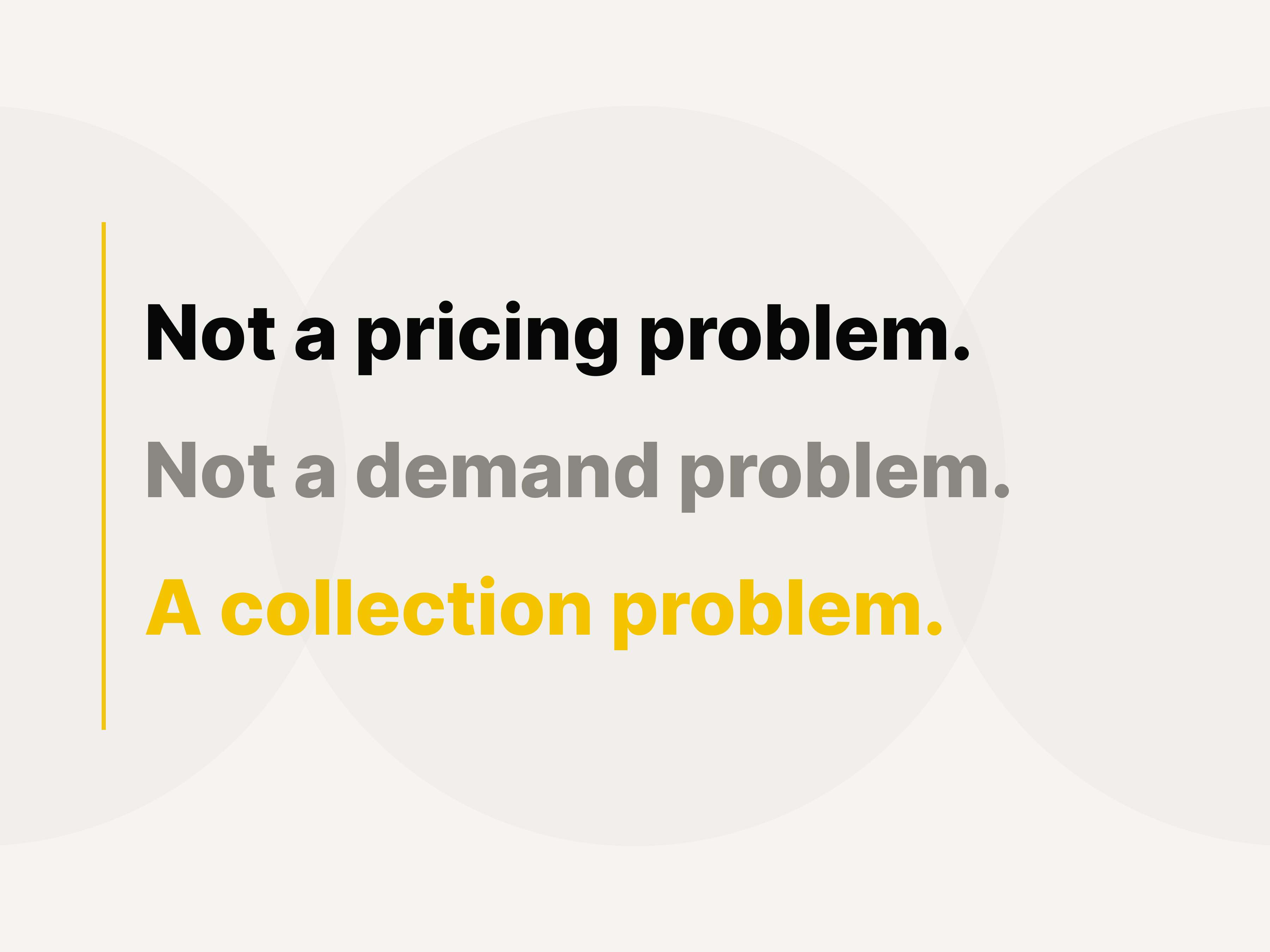
When coaches dig into this, the diagnosis is almost always the same. Not a pricing problem. Not a demand problem. A collection problem, specifically, a combination of late invoicing, inconsistent follow-up, and no clear picture of what's actually outstanding at any given time. The tradie knows the revenue number, or thinks they do. What they rarely know, until a coach asks, is what they actually collected.
The Patterns Coaches See in Struggling Businesses
Cash flow blind spots and the hourly rate illusion come up constantly in coaching conversations; most trade business owners can't say what's outstanding or overdue right now, and most significantly overestimate what they actually earn per hour once you count unbillable admin time.
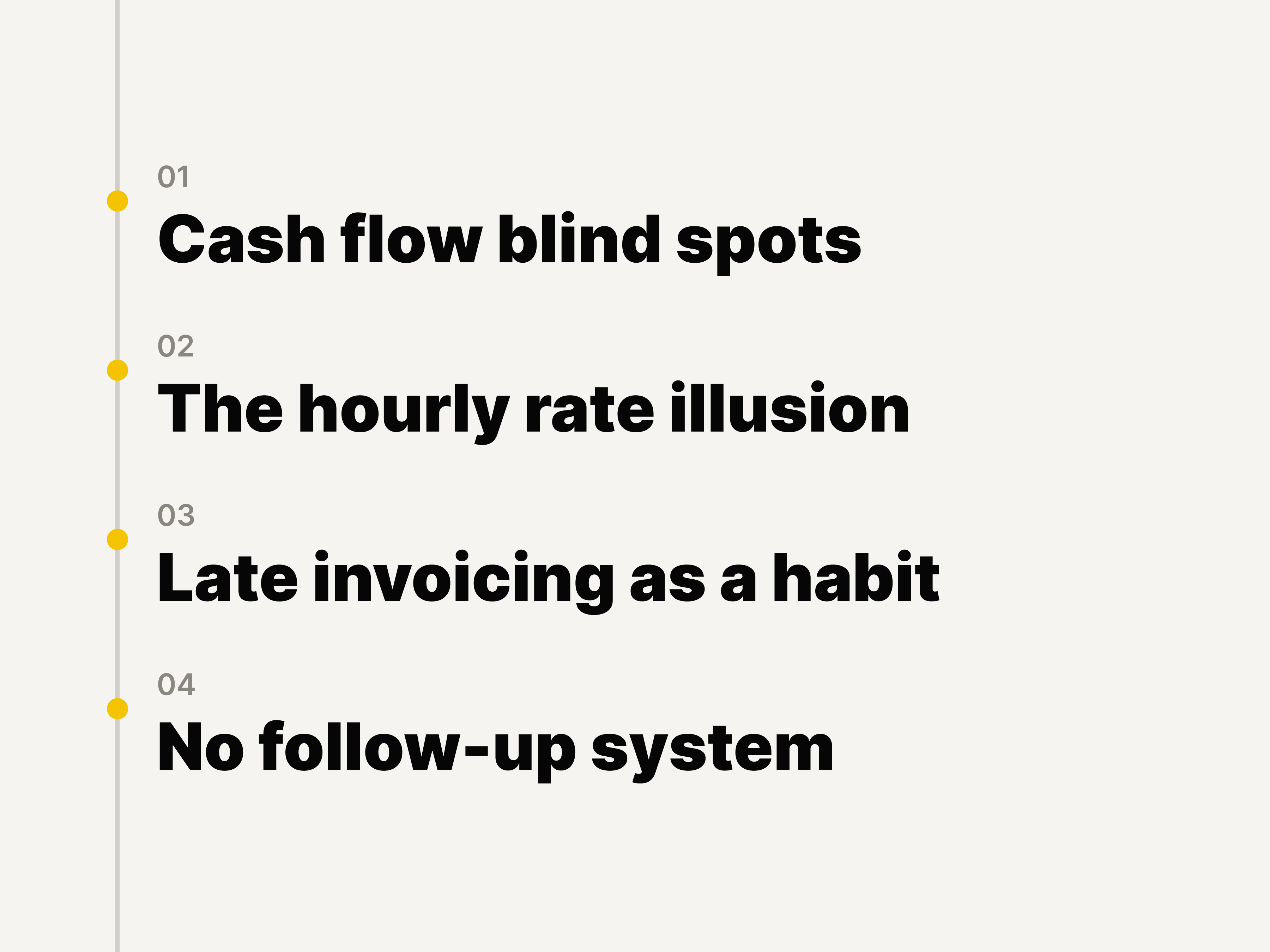
Late invoicing as a habit is the other pattern coaches flag early. The invoice goes out two to five days after the job. In isolation, that seems minor. Across twenty jobs a month for twelve months, it's the structural reason the business always feels slightly behind, the payment clock starts late on every job, and the collection cycle runs longer than it needs to.
No follow-up system rounds it out. Most tradies follow up on invoices when the pressure becomes uncomfortable, usually at the three-week mark. The seven-day follow-up, which catches most slow payers before they become genuinely late, simply doesn't happen consistently. There's no system. There's a memory, and memory is unreliable when you're running three jobs at once.
What the Best-Performing Clients Have in Common
Across the coaching community, the consistent finding about high-performing tradie clients isn't that they work harder or charge more. It's that they know their numbers, and they know them before the decisions need to be made.
They invoice the same day the job is done. They follow up on a schedule, not on a feeling. They know their outstanding and overdue position every week without having to look for it. They treat their hourly rate as something to protect, not by raising it, but by reducing the unbillable hours that erode it.
None of these practices requires advanced financial knowledge. They require a system that makes the right information available at the right time, and a habit of acting on it.
How Financial Data Changes What Coaching Can Achieve
The most significant shift coaches describe in their highest-performing clients isn't a change in knowledge; it's a change in decision-making. When a business owner has accurate, current financial data, the coaching conversation changes completely.
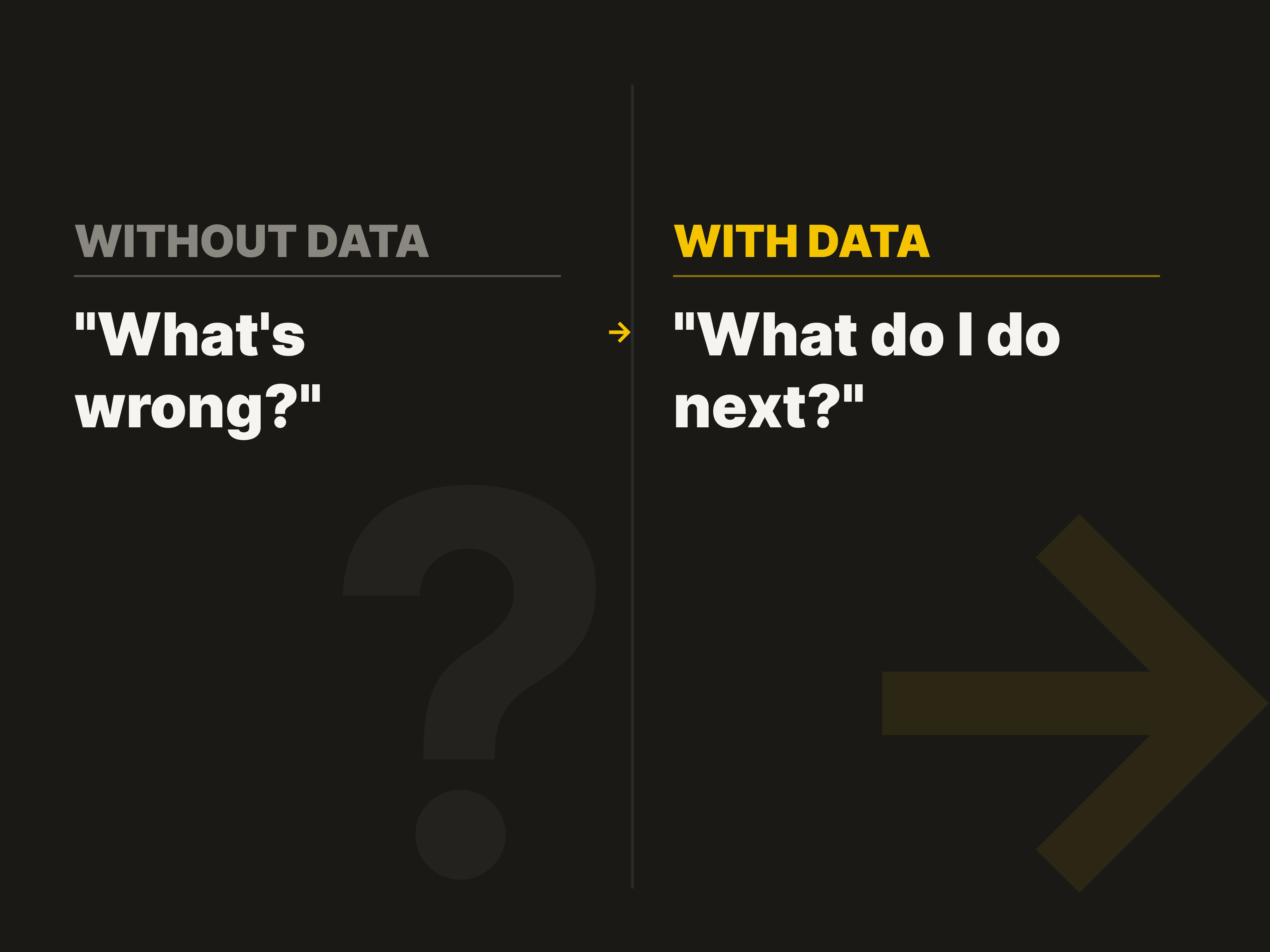
Without data, coaching conversations are necessarily about problems: why does the cash always feel tight, why are certain clients always slow, why isn't the business generating the profit it should? Important conversations, but reactive ones.
With data, with a business owner who knows their numbers every morning and can see their collection cycle clearly, the conversation shifts from problems to decisions. The question shifts from 'what's wrong?' to 'what do I do next?' That's where coaching produces its fastest results.
Financial clarity isn't the end goal of coaching. But coaches consistently report it's the prerequisite. A business that can't see its own financial position clearly can't be coached effectively, because neither the coach nor the owner knows what they're actually working with.
Why the Coaching Community and Work Smarter Share the Same Philosophy
The Work Smarter series isn't trying to replace a business coach. It's built on the same underlying principle: financial clarity is available to every trade business owner, doesn't require accounting expertise, and businesses that achieve it consistently outperform those that don't.
The coaches who work with Australian trade businesses have spent years building that clarity one client at a time. Work Smarter is a different format, content rather than coaching, available to anyone, not just clients. Same philosophy, different delivery.
If you're working with a coach and want to get more from the engagement, bring better data. If you're not working with a coach and you're feeling the financial weight most tradie business owners carry, start with the data. Know your numbers. Know them every day. Everything the coach would tell you about decisions follows from that foundation.
Korda Pro works with a network of tradie business coaches across Australia. Learn more at kordapro.com/partners