What the Best-Run Trade Businesses Do Before 8am
A 90-second tradie cash flow routine before 8am: know what's collected, outstanding and overdue before the first job, without logging into Xero.
Korda Team
Most trade business mornings start the same way. Alarm at six. Coffee. Check the messages that came in overnight: a client wanting to reschedule, a crew member running late, a quote request that can wait. By 7am you're in the ute, focused on the first job, and the week's financial picture hasn't entered your head.
That's not a criticism. It's the rational response to a morning that offers no financial information without effort. If knowing your cash position means logging into Xero, opening the banking app, and cross-referencing which invoices have cleared, most mornings that doesn't happen. The job is more pressing. The job is always more pressing.
The tradies who feel most in control of their business aren't working more hours. They start each day already knowing three numbers: collected, outstanding, and overdue. Everything else follows from that.
The tradies who feel most in control of their business aren't working more hours - they start each day knowing three numbers. Everything else follows from that.
The mechanics of what those three numbers mean and how they're calculated are covered in full detail here:
What 90 Seconds of Information Does
It's 7:05am. You've just seen the three numbers. Here's what changes.
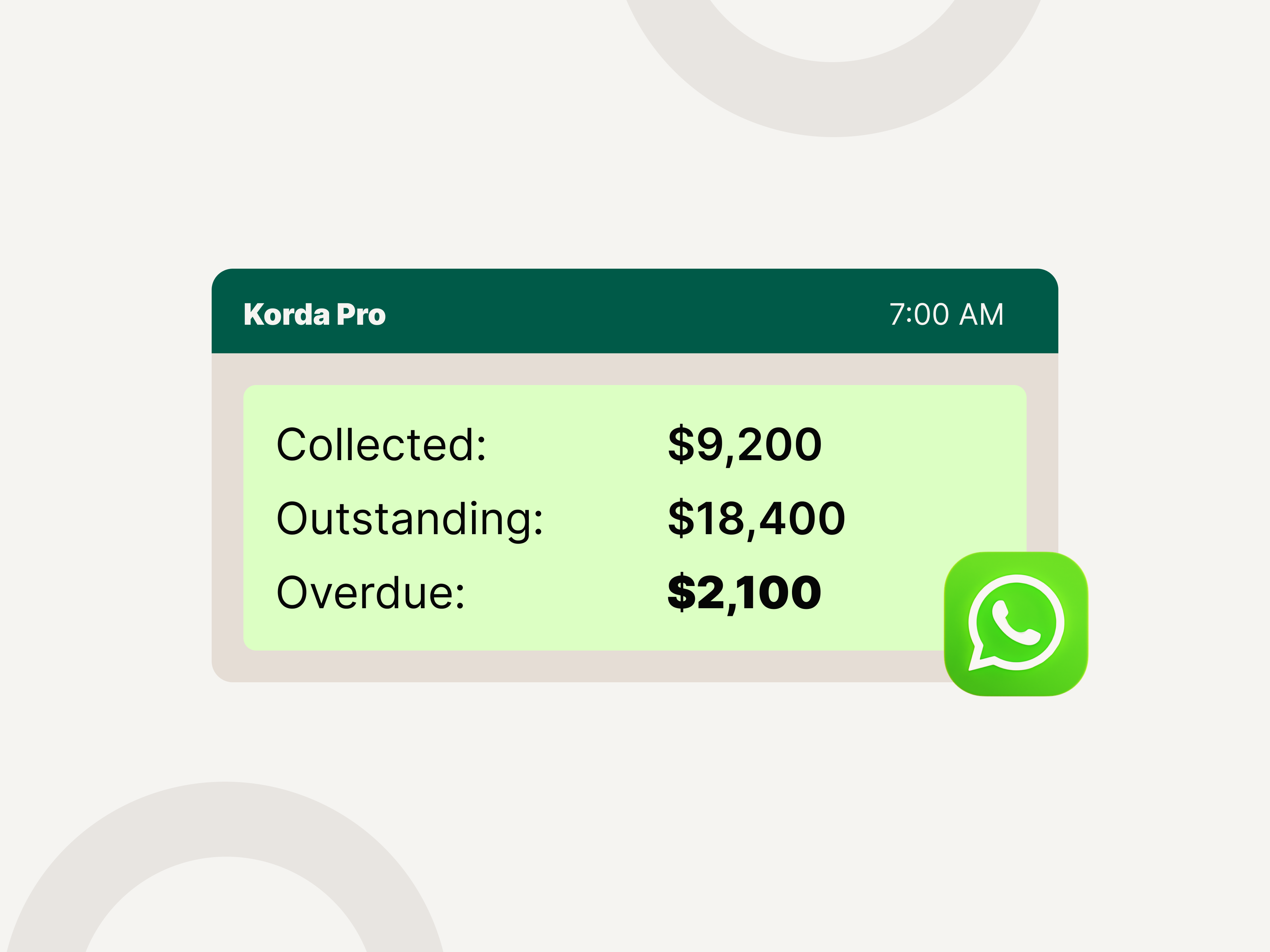
Outstanding is healthy, $18,400 across six invoices, all inside their terms. Collected for the week is $9,200. Overdue shows one invoice: $2,100, eleven days past due, a plumbing job in Cronulla done three weeks ago.

That one overdue number changes your 7:45am.
You had a quote to send this morning, a larger job, a new client, materials needed upfront. Before you saw the numbers, you'd send it out without a second thought. Now you know you've got $2,100 sitting eleven days overdue before you take on anything that requires an outlay. You send the client a message on the way to the first job, friendly, professional, just checking the invoice landed okay. By 9am they've replied. By 11am it's paid. The quote goes out that afternoon.
That decision, the two-minute message at 7:45, prompted by a number you saw at 7:05, recovered $2,100 and prevented a cash flow squeeze you wouldn't have noticed until Friday. That's what knowing your position before the day starts does.
How Knowing the Numbers Changes the Shape of the Day
Quoting behaviour
When you know what's outstanding, you know what's coming. A tradie who sees $22,000 in outstanding invoices inside their terms quotes confidently on new work. A tradie who doesn't know their position hesitates, not because the business is in trouble, but because they can't see clearly enough to know it isn't.
Supplier timing
A large material order feels different when you can see $8,000 clearing in the next three days than when you're not sure. Knowing your outstanding position lets you time supplier payments without relying on gut feel.
Who you call first
One overdue invoice in the morning means one targeted message before the day begins. Without the number, the follow-up happens when you happen to think of it, which means it competes with everything else the day throws at you, and often doesn't happen at all.
Why a Brief Beats a Dashboard
Some people log into a dashboard every morning to find the numbers themselves. Some trade business owners do exactly that, and it works if the habit sticks. For some people it does.
But the reality of a trade morning is hostile to habits that require a login. You're loading the van, answering messages, getting the crew sorted. The window between coffee and the first job is not built for a considered financial review.
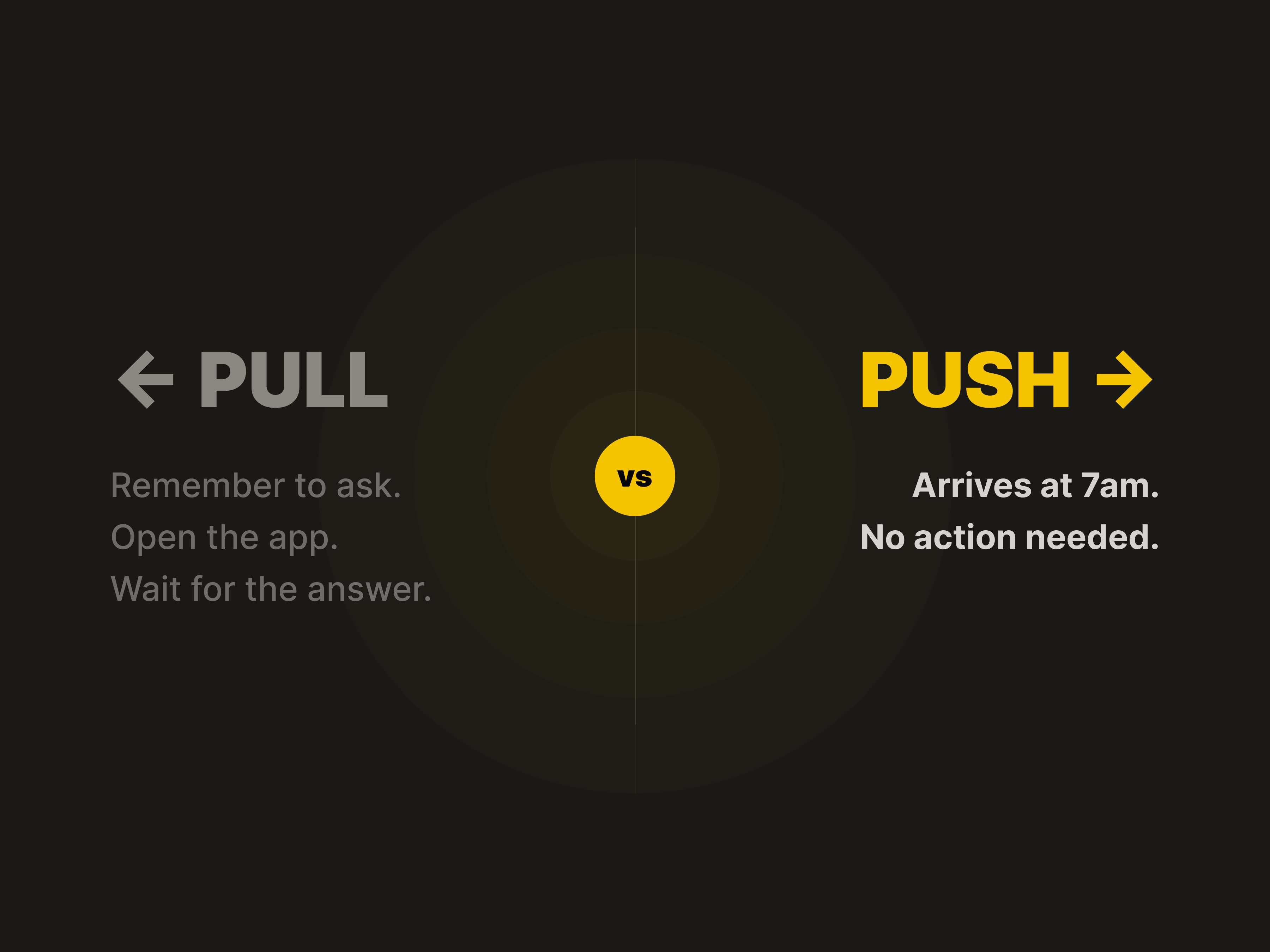
A brief that arrives without you doing anything, three numbers, in a message, before the first job, removes the habit entirely. The information finds you. You don't have to find it.
The tradies who know their numbers every morning aren't more disciplined than the ones who don't. They've set up a system where the information arrives without requiring discipline.
Why This Isn't the Same as Asking an AI Assistant
Xero's own AI assistant, JAX, can answer a question if you ask it one. Text it “how much am I owed right now”, and it'll tell you. That's useful, but it still requires you to remember to ask, at exactly the moment when remembering is hardest: 7am, van half-loaded, three things happening at once.
The combination of the daily brief and the weekly close means you're never more than 24 hours behind your financial position. For a trade business without a bookkeeper, that's the standard worth aiming for. Not a dashboard. Not an accounting course. Ninety seconds each morning and five minutes on Friday. That's what the best-run trade businesses actually do.
Frequently asked questions
What three numbers should a tradie check every morning?
Collected (cash that has actually landed in the account), outstanding (invoices sent and not yet due), and overdue (invoices past their due date). Together they give a complete daily cash position without logging into accounting software.
What's the difference between outstanding and overdue invoices?
An outstanding invoice has been sent and is still within its payment terms; it's expected but not yet due. An overdue invoice has passed its due date and hasn't been paid. Outstanding is a timing issue; overdue needs attention.
How can I check my cash position without logging into Xero every morning?
A daily brief delivered automatically, rather than a dashboard you have to remember to open, removes the login step entirely. Korda Pro's Morning Brief sends collected, outstanding, and overdue figures to WhatsApp at 7am, drawn from the same Xero data your bookkeeper sees.
Is this different from asking an AI assistant like Xero's JAX for my numbers?
Yes. JAX answers when you ask it a question, which still depends on remembering to ask at the right moment. The Morning Brief is pushed automatically at 7am, so the information arrives whether or not the morning gets away from you.
How often should a trade business check its cash flow?
Daily for the operational view (what's overdue, what needs a call today) and weekly for the pattern view (is collected revenue tracking with work completed). A 90-second daily check plus a five-minute Friday close keeps most trade businesses within 24 hours of their actual position.